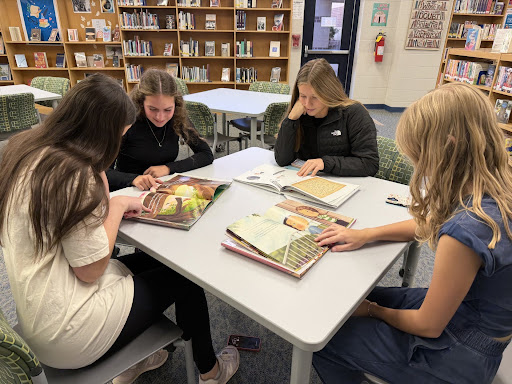
A fable is a short story, typically one that involves animals as the main characters, and displays a moral of the story. Fables are used to teach children life lessons, while keeping kids interested. Some common fables are:
- “The Tortoise and the Hare”
- “The Boy Who Cried Wolf”
- “The Three Little Pigs”
- “The Ugly Duckling”
- “The Lorax”
- “The Giving Tree”
Fables are often children’s books written to teach them important life lessons, but their lessons can also apply to high school students. High schoolers face problems such as toxic relationships, rumors, inadequacy, academic pressure, college stress, sports, and procrastination.
Although their problems are slightly more complicated, high school students’ problems are quite similar to those that are addressed in fables.
The Tortoise and the Hare
“The Tortoise and the Hare” is one of the most memorable fables. As kids, it is a short story about a slow tortoise beating a fast hare, and the simple theme that “slow and steady wins the race.” Looking back it is more relevant in high school than it is at any other time in life.
For high school students it’s easy to compare themselves to classmates or peers that seem to be excelling in school or in sports and extracurriculars. Students often feel inadequate to their peers who appear to be leaps and bounds ahead of them, while they are tracking slowly behind.
Many students discover that success isn’t always about natural talent. For example, the student who studies each night is more successful than the student who crammed one hour before the test. Or the athlete who practices every day improves more consistently, and makes more progress over time, compared to the athlete who only practices once a week.
Like the tortoise, individuals who work at a consistent pace often progress faster than those who experience short bursts of growth.
The Boy Who Cried Wolf
In high school, a rumor can spread to the entire school within a few minutes. Therefore, trust is an important trait for high schoolers, but trust can be easily lost
In the fable, “The Boy Who Cried Wolf,” the main character continued to lie that there was a wolf near him to receive attention from the town. The boy continued to repeat the lie until eventually the townspeople stopped showing up. One day the boy actually sees a wolf and yells for help, but no one comes.
Trust is one of the most important parts of everyday school life because trust shows up in so many different ways at school, whether you are working on a group project, maintaining friendships, or telling secrets.
Even though most students aren’t pretending that there is a wolf nearby, trust can be broken in other ways. Spreading rumors, breaking promises, and repeatedly excluding each other makes it harder for friends to trust each other.
The Three Little Pigs
While completing tasks high school students often face moments where they have to decide between what will get their work done the fastest and what will get their work done the best. In the fable, “The Three Little Pigs,” the decision on how effortfully students complete assignments can be represented by houses made from straw, sticks, and bricks.
Students who continuously study each night, manage their time, don’t procrastinate, and plan for future goals, are building themselves brick houses in their academics. The hardworking students’ methods create a strong foundation for success because they take the extra time to stabilize their academics.
Students who care very little about their academics — indulging behaviors such as cheating, not studying, and not completing work — can be compared to the pig who built the straw house. The little pig decided to pick the easiest but most unreliable way to build his house. Similarly, students complete their work quickly with minimal effort resulting in low grades and unreliability.
The main idea that a strong foundation is slowly built one brick at a time strongly correlates to how students must complete their work if they want a strong and reliable foundation.
The Ugly Duckling
Few experiences are more common in high school than feeling a lack of belonging. Whether that means students struggle at finding the right friend group, being comfortable with themselves, or uncertainty about their future.
“The Ugly Duckling” tells the story of a duckling who looked different from its siblings and felt out of place, later in the story he discovered that he was never meant to fit in where he started.
High school introduces students to new classes, clubs, sports, and opportunities, but it can cause pressure for students to compare themselves to others. No matter if it is academics, sports, friends, or appearance, students often feel behind or as if they don’t belong.
Eventually, students discover that finding out who they are takes time and effort. Students often have to experiment with different activities to learn more about themselves and understand that fitting in isn’t about changing themselves, it’s about finding where they belong.

Leave a Reply