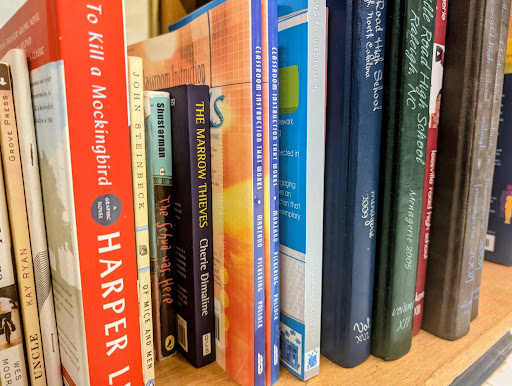
Why do books hold such significance? We all know the battle of banned books in schools and libraries, but why is literature targeted? Movies can significantly shape how we view society in the same way that books do, so why aren’t they being banned as well?
Everyone knows that books are important, but not many people can explain exactly why.
“Reading is the sole means by which we slip, involuntarily, often helplessly, into another’s skin, another’s voice, another’s soul.” – Joyce Carol Oates
A book is the only type of media that allows us to enter another person’s mind. Their thoughts, feelings, moral dilemmas, corruption, grief, etcetera. In a movie or TV show, viewers can physically see someone making a decision or facing inner turmoil, but we can’t always feel it the same way.
Censors aren’t scared of people watching someone do something controversial. They’re scared of the thought process behind it. A book allows someone to understand the “why” behind doing something. The simplicity of being put in someone else’s shoes can not only change someone’s opinion, but also their entire mindset pertaining to that topic.
Literature can introduce people, and specifically young students, to another level of empathy. By delving deeper into someone else’s mind, they can feel a connection to an experience that they’ve never been a part of.
“A book is a device to ignite the imagination.” – Alan Bennett
When watching a movie, very little is left to the imagination. The writers create a story, and the director brings it to life how they perceive it. The viewers never have the chance to contemplate their own interpretation of the work, since it has already been interpreted.
In a novel, the author creates the story and may have a specific image in their head when writing it – but oftentimes, parts of the story are left for the reader to construe. A significant part of literature is the co-creation aspect of story making. Reading doesn’t just mean looking at words on a paper, but also constructing tone, meaning, and images in a personal way.
This personalization and creation of thought can intimidate those who wish to censor certain topics, because once a book is left up for interpretation, it’s out of their control.
“To read is to voyage through time.” – Carl Sagan
Literature serves as society’s memory bank. Books allow people the ability to travel back in time and face the uncomfortable truths of human history.
Those in power often try to control the present by reshaping the narrative of the past. The easiest way to do this is taking away the written evidence of history itself. Movies are relatively new in human history, and rarely include primary sources, making it easier to shape a story to fit a different narrative.
Books however, have been around for over 5,000 years. Writing was one of the first known methods of communication between humans, and it’s much harder to censor or re-shape a written primary source.
Without books and stories passed down through generations, the terrors and faults of humanity would be buried. Literature allows us to remember and reflect on the past, in order to prevent corruption and cruelty.
Major shifts in human rights and social norms came from books. Common Sense, The Jungle, Uncle Tom’s Cabin, and more all sparked a demand for change in some way. Books can shape political and social structures permanently, when most other media have never had a similar effect. Censors know that movies can ignite a more temporary emotional response, but a foundational novel can completely alter someone’s philosophy and inspire systemic change.
“One of the best things about reading is that you’ll always have something to think about when you’re not reading.” – James Patterson
The most powerful quality of books is the privacy they give. No one can monitor the thoughts or images someone conjures while reading – it is entirely private.
Movies and TV are much easier to control because censors can not guarantee what viewers are thinking, but they know the message and the imagery attached to it. In a novel, the overall theme or meaning is often left up to the interpretation of the reader, and nearly impossible to maintain control of.
Having the space and time to process and analyze a novel gives readers the freedom for self reflection and evaluation. Privacy is a breeding ground for independence and free thought, a censor’s number one fear.
“There is power in words. Reading is an escape.” – Jesmyn Ward
Books are so much more than black and white ink on paper – they are stories, memories, and adventures, full of color and life. They not only remind us of where we came from, but also where we have left to go.
In some places, reading is still a privilege, not a right. Those places are controlled by those afraid of free thought and creativity. The motive behind banning literature is fear, and that fear is drawn from the freedom and autonomy that books give.

It makes my day better when I park well.
Leave a Reply