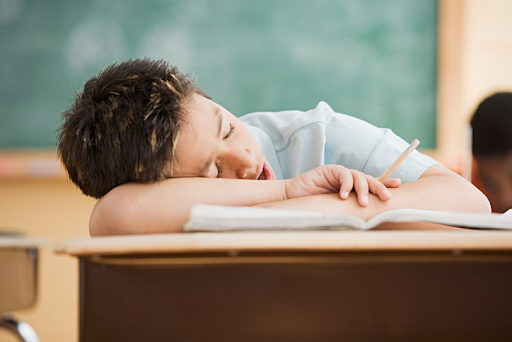
Over 77% of high school students nationwide attain fewer than eight hours of sleep on school nights, and an astonishing 20% sleep for five hours or fewer, according to youth risk data from the Centers for Disease Control and Prevention. While medical experts at the American Academy of Pediatrics recommend eight to ten hours of sleep per night for healthy adolescent development, the reality inside Leesville looks drastically different. Between late night study sessions, practices, jobs and relentless screen time, running on empty has become the new normal. Lots of people write this off as a typical teenage habit, but it is actually a growing public health issue affecting grades, mental health, and school culture.
Eliza Welch, sophomore, who takes honors and AP classes and is on the girls soccer team at Leesville, said, “I feel like I’m always choosing between getting a good grade or getting enough sleep. If I have multiple tests the next day, I know I will be going to bed late since I have to study.”
The reasons behind this decline are complex, involving a mix of human biology, technology, and the pressure of adolescent schedules. The biological shift is a major shift that is often overlooked. According to the National Institutes of Health & National Sleep Foundation, during adolescence, the body’s natural circadian rhythm shifts. Teenagers naturally produce melatonin, the hormone responsible for sleepiness, later in the evening than adults or children do. A biological shift means most high schoolers are not naturally wired to fall asleep before 11:00 p.m. When a late biological bedtime collides with an early morning alarm clock, students are forced into a permanent state of sleep debt before their week even begins.
The high school experience has been very demanding for decades. On any given afternoon, a student might finish school at 2:18 p.m, head straight to practice, club meetings or afterschool activities until 5:00 p.m, work an evening shift at a part time job and finally sit down at their desk to do homework and studying by 8:00 p.m.
Reflecting on the daily struggle, Welch said, “I honestly can’t remember the last time I woke up feeling fully rested on a school day. Between soccer, homework and time with friends and family, getting eight hours of sleep seems almost impossible.”
Technology only amplifies this daily grind. Based on the Harvard Medical School, Division of Sleep Medicine, the blue light from phones, tablets and laptops trick the brain into staying awake by blocking melatonin production right when students need to wind down. Combined with the urge to check group chats and scroll through social media late into the night, digital devices have become a primary thief of teenage sleep.
The consequence of chronic sleep deprivation extends far beyond feeling groggy. Sleep loss directly harms memory consolidation, focus, and emotional regulation, which are all critical components of academic performance and mental health. In the Leesville classrooms, teachers witness the impact of teenagers sleeping poorly every day.
The issue goes beyond academics:
- Mental Health Strain: Sleep deprivation is closely linked to increased anxiety, irritability, and depressive symptoms among teens
- Weakened Immune Systems: Students who consistently miss sleep develop sicknesses more often, leading to being absent more often and more missing assignments
- Extracurricular Burnout: Tired students are more likely to drop out of clubs, sports or leadership roles because they lack the energy to balance them along with homework
While high school demands a lot of students’ time, managing the sleep gap comes down to how well students handle their time. Making small adjustments to nightly habits can lead to major shifts in the morning.
- Finishing homework early: Breaking up study sessions right after school or practice prevents late night panic, preventing students from staying up past midnight.
- Keeping weekend sleep steady: Sleeping in until noon on Saturday might feel great at the moment, but a shift in sleep schedule by four or five hours throws off the body’s internal clock and makes Monday morning brutal.
- Setting a technology curfew: When students give themselves just 30 minutes of screen free time before sleep allows the brain to wind down naturally, making it much easier to fall asleep once their head hits the pillow.
Running on empty is not an inevitable part of being a teenager, nor should chronic fatigue be viewed as the key to academic success. When students at Leesville treat rest with the same importance as grades, athletic performance, or leisure time, they take control of their health, focus, and overall daily high school experience. Clearing the early morning fog in our hallways starts with recognizing that proper sleep isn’t a luxury, it’s the foundation for success.

Leave a Reply