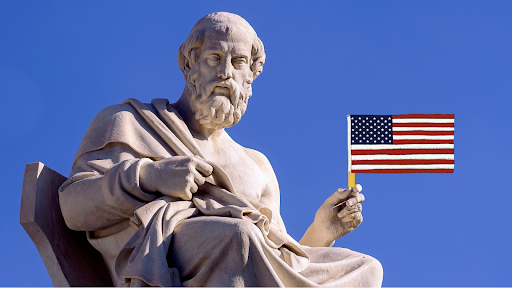
When the North Carolina provisional government asked Founding Father and future 2nd president John Adams for advice on how to develop a government that would truly represent the people, he said, “The principal difficulty lies, and the greatest care should be employed in constituting this Representative Assembly. It should be in miniature, an exact portrait of the people at large. It should think, feel, reason, and act like them. That it may be the interest of this Assembly to do strict justice at all times, it should be an equal representation, or in other words equal interest among the people should have equal interest in it.”
The 119th Congress is lacking when it comes to matching the populace.
The Education Gap: The widest demographic gap is in education. While only about 38% of Americans hold a bachelor’s degree or higher, 94% of Congress do. Furthermore, 67% of Congress holds an advanced degree (Master’s, JD, PhD), compared to just 14% of the public.
The Wealth Divide: The median member of Congress is roughly 5x wealthier than the median American household. About half of Congress are millionaires, creating a “millionaire’s club” legislature. According to a study from political scientists from Boston University and the University of Georgia, in 190 of the largest cities, renters are underrepresented by a margin of over 30 percentage points across various levels of government. High homeownership rates are consistent across all offices. At least 80% of Senators, federal judges, members of Congress, governors, state legislators, mayors, and city councilors are homeowners.
The Age Gap: The Senate is dominated by the Baby Boomer generation (61%), despite Boomers making up only about 20% of the adult population. Gen Z and Millennials, who comprise a significant share of the workforce and electorate, are largely underrepresented in the halls of power.
The Secular Gap: While nearly 30% of Americans are religiously unaffiliated, they have almost zero representation in Congress, which remains 87% Christian.
The Ethnic Gap: Although the current congressional makeup is the most diverse in American history, it does not align with the American populace, with 74% of Congress being held by non-Hispanic White people, compared to only 58% of the US population being non-Hispanic Whites.
This doesn’t really sound like “an exact portrait of the people at large”.
What can really solve this problem? Probably nothing…. But maybe, just maybe, we could use a piece of ancient Greek democracy to modernize our government.
The only elected officials in Ancient Athens were the military leaders, so that those with experience could remain in their positions and maintain a proper military; all others were randomly selected enfranchised individuals, land-owning adult Greek-born males. These randomly selected individuals would be put through a screening process and then be appointed to magistrate positions, who would help create and enforce laws. This system is Sortition, the selection of public officials or jurors at random in order to obtain a truly representative sample of the population.
The Athenians created this system in an effort to ward off oligarchic control. Plato described oligarchy as “A government resting on a valuation of property, in which the rich have power and the poor man is deprived of it…[where] one, seeing another grow rich, seeks to rival him, and thus the great mass of the citizens become lovers of money…and so they grow richer and richer, and the more they think of making a fortune the less they think of virtue…and in proportion as riches and rich men are honored in the state, virtue and the virtuous are dishonored.” Sounds a little bit familiar.
America is already familiar with this system as it is the main component of the Judicial system, the American Jury is a form of sortition. Juries, when they actually resemble the immediate population, are more trusted than career politicians.
So why not apply this theory to local lawmaking?
Replacing Congress with a random group of citizens is probably not a good place to test how viable this system is; however, convening conventions of lottery-selected citizens to solve specific problems, such as county, regional, or even statewide issues, may be a more effective approach.
One major issue that the state government has struggled to solve is road infrastructure.
Local NC Representative Phil Rubin said of major traffic projects, “And because they’re getting to be so large that it’s stifling growth and we can’t pay for them, and they take decades to get done. Capitol Boulevard is the one that most folks here would identify with. That traffic is atrocious because the road should have been widened 10 years ago and we just haven’t paid for it. And now it costs more,”.
Representative Rubin’s and Wake County’s frustration with Capitol Boulevard highlights a critical flaw in our current system: the mismatch between the long-term needs of a community and the short-term incentives of politicians. Widening a major artery like Capital Boulevard requires massive upfront funding, likely through taxes or bonds, and years of disruptive construction.
For a career politician, this is a minefield. Voting for higher taxes or months of gridlock close to an election is politically rocky. As a result, necessary projects are kicked down the road until the cost becomes astronomical. The “experienced” leaders we elect are often too paralyzed by the fear of losing their seats to make bold choices.
This is where sortition would thrive.
Imagine if, waiting for an underpowered city council or gridlocked state legislature to act, North Carolina convened a “Citizens’ Assembly on Infrastructure.”
This body would not be made up of individuals running for office seeking donations or looking to score points on social media or the news. Instead, it would consist of 150, 200, 300, or more residents of Wake County selected by lottery and reviewed to mirror the demographics of the region. You would have teachers, mechanics, nurses, lawyers, McDonald’s employees, retirees, and recent graduates all taking an active role in improving their own lives and the lives of their fellow North Carolinians.
Unlike a random discussion or debate, where the loudest, angriest, and most obnoxious voices dominate, this assembly would be structured and deliberate:
- Invitations are mailed randomly (like jury duty), with a stratified selection process to ensure the group matches the county’s gender, age, race, and income demographics.
- The citizens are paid for their time and spend the first phase hearing from experts, in this case, urban planners, traffic engineers, and economists. They get the raw facts on costs, timelines, and trade-offs.
- They debate amongst themselves, not to win an argument, but to solve the problem they all face daily.
- Because they do not have to worry about a re-election campaign, they are free to make the “unpopular” but necessary choice—whether that is a slight tax increase, a toll, or a bond measure—to finally fix the road.
The immediate counter-argument to this approach is usually one of competence: “Do we really want uneducated people making complex decisions about zoning and infrastructure?”
This skepticism ignores one of the major issues with our current government. As noted earlier, 96% of Congress holds a bachelor’s degree, yet they struggle to pass basic budgets. High academic credentials do not guarantee practical wisdom or political courage. In fact, the “Education Gap” suggests that current leaders are dangerously disconnected from the daily realities of the average American.
A citizen drawn from the working class knows exactly what an extra 30 minutes in traffic costs their family in childcare fees or lost wages. They understand the value of the dollar in a way a millionaire politician with an economics degree could never dream of.
As John Adams argued, the assembly should “think, feel, reason, and act” like the people. A randomly selected group possesses a cognitive diversity that a room full of law school graduates simply cannot match.
If we trust a jury of twelve random citizens to decide the fate in a murder trial, to weigh complex forensic evidence and legal standards– why would we hesitate to trust ourselves with our roads?
We are currently relying on a political class that is statistically wealthier, older, and more educated than the rest of us to solve problems they rarely experience. It isn’t working. To fix the gridlock on Capital Boulevard and our Democracy, we may need to stop looking for better politicians and start looking at each other.
It is time to take John Adams seriously and build a government that is truly a “miniature portrait” of the people– not just in spirit or campaign slogans, but in practice.
It makes my day better when my hair isn’t a mess when I wake up.

Leave a Reply