As the holiday season approaches, many of us reflect on cherished traditions that make Christmas feel special. However, some beloved customs have faded into the past over the years, leaving us to wonder what happened to the practices that once brought families together.
As we embrace new customs in our holiday celebrations, we might also consider bringing back some of these forgotten practices, enhancing our Christmas experiences while honoring the memories they hold.
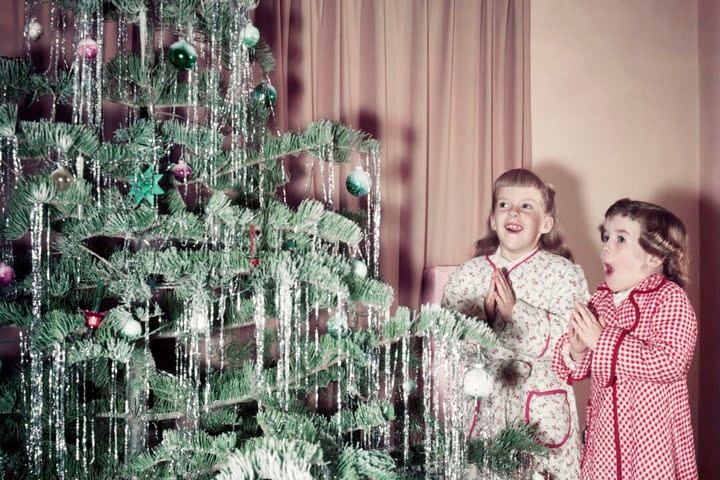
Until 1972, it was common to see many families’ Christmas trees decorated with tinsel. Invented in Germany in 1610, the simmering silver stands shone like no other decoration.
Unfortunately, however, the use of lead in tinsel was banned by the FDA due to the risk of kids eating it and developing lead poisoning.
Other companies tried to take the place of the popular decoration, but nothing could quite shine the way tinsel did; thus, it was lost to the ages.
Christmas Club Saving Accounts
Starting in 1965, each January, millions of Americans deposited $1-$10 weekly into special “Christmas Club Accounts,” saving over 2 billion dollars annually.
Members would receive no interest, but banks would mail checks in early December, ensuring Christmas money. Banks would compete with complementary gifts such as blankets, toasters, or dishes for opening accounts.
However, by 1980, automatic savings transfers and credit cards made the savings accounts unnecessary, and over time they were forgotten about.
Real Candles on Christmas Trees
Despite the very obvious fire hazard, it was customary for families to place actual candles on trees.
Special clip-on holders would secure tiny candles to branch tips. However, families would only light them for a couple of minutes on Christmas Eve with buckets of water and fire extinguishers nearby.
Many insurance companies despised the practice, and firefighters protested against it; however, it persisted in some households.
There were a total of 8,000 Christmas trees that caught fire annually. Due to this, the tradition has flickered out forever; however, this special custom could be brought back with fake candles.
Handmade Paper Chain Decorations
Every classroom and home in the 1960s featured miles upon miles of construction paper chains during the Christmas season.
Kids would spend hours cutting out the strips and connecting the chains. Schools would make chain-making into competitions, seeing who would make the longest chain.
Some families would even make chains from magazine papers, cardboard boxes, or sheet music. Chain-making parties became all the rage.
By the 1970s, manufactured chains became so cheap that it seemed pointless to make homemade ones. Thus, they were lost to time, but they are still a fun craft to participate in this Christmas.
Christmas season Sundays in the 1960s meant that absolutely nothing was open. These religion-based regulations forced all businesses to close on Sundays, especially during December.
Grocery stores, department stores, and gas stations all closed till Monday — only some pharmacies could stay open for emergencies.
The open Saturday meant spending more time with family and mass numbers at the church services.
By 1970, commercial pressure began getting rid of Blue Laws. Eventually, the Supreme Court case McGowan v. Maryland upheld Blue Laws, but weakened their enforcement.
Over time, states began repealing these laws until they were lost without a trace.
Christmas Bonus Cash Envelopes
In the 1960s and early 1970s, companies routinely handed out envelopes full of cash during the holiday season. This practice has become extinct today.
The average bonus in 1968 would be about a week’s salary. This was simply a gift for the holiday season, and many families relied on this bonus to afford Christmas presents.
It was also very common for families to purchase presents in advance, expecting that bonus. However, by the late 1970s, IRS rules tightened, and the idea of “Christmas Bonuses” began to fade away.
These weren’t just your regular run-of-the-mill carolers; wassailers would go door-to-door singing and well-wishing in exchange for hospitality.
The wassail bowl, a large bowl filled with ale or wine mixed with eggs and spices, was set ready by the door throughout the season for wassailers.
Today, people are more reclusive and customs such as caroling or Wassailing almost completely don’t exist.
As we embrace new traditions, perhaps we can also find ways to revive some of these forgotten practices, enhancing our Christmas experiences while honoring the memories they hold. After all, the essence of the season lies in connection, creativity, and the joy of shared moments.

My best friends make my day better.
Leave a Reply