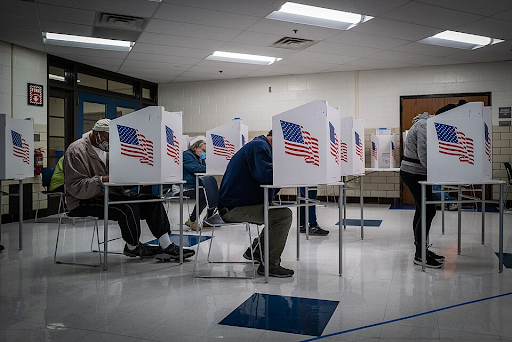
Should 16 and 17 year olds be allowed to vote in elections? Not all Leesville students agree. Some believe that they should have a voice in decisions that affect them, others do not trust themselves or others their age to make responsible decisions.
Matthew Fontez, senior, believes students aren’t educated enough to “…know about politics and what ideals the people have yet, so until they do some research I’m gonna have to say no.”
There is data to support what he said: according to the Associated Press, 44% of teens aged 13-17 do not closely follow politics. However, according to a Gallup poll, 19% of adults do not follow politics “too closely,” and 8% don’t follow politics at all.
Additionally, the Gallup poll found that an additional 44% of adults only followed politics ‘somewhat closely’. This calls the matter of teens being politically uneducated compared to adults into question.
Zion Wilcox, sophomore said, “A lot of students are really well educated, just because they aren’t 18 doesn’t mean they can’t have an opinion.”
Making this change has worked in practice. According to WorldAtlas, several countries allow voters younger than 18. Austria, Brazil, and several other countries allow 16 year olds to vote, and Greece, Indonesia, and Sudan allow 17 year olds to vote.
Fair Vote points out that “When 16- and 17 year olds engage in civics, conversations about politics and local issues are brought to the dinner table. Parents and family members are engaged in civic life through the 16- and 17 year olds in their household, with a positive impact on voter turnout for people of all ages.”
However, many people doubt that people younger than 18 have the necessary maturity and political knowledge to vote. Betania Metaferia, junior, said “16, 17 is too young and that’s my age, and I don’t think I’m responsible enough to vote.”
But what issues would teen voters care about anyway? According to Harvard, economic concerns, government corruption, and AI taking jobs are top concerns. Being concerned about these issues makes sense, as these are some of the issues most relevant to young voters.
Teenagers’ concern about these topics shows maturity, as they care about major national level issues.
Additionally, many elected positions have terms that will still be in progress by the time that people who couldn’t vote turn 18, meaning that young citizens are represented by people they didn’t have a say in voting for.
Lowering the voting age to 16 makes even more sense as it reinforces the idea that turning 16 is a major point of significance in American culture. 16 year olds are trusted to have the maturity to drive a car, have a job — if school requirements are met some places even let 16 year olds work full time — fly a plane, open a bank account, change your name, and 23 states, including North Carolina, allow marriage at 16, according to TeenMag.
Despite the enormous jump in actions that 16 year olds can legally take, people still believe that they lack the necessary maturity to vote. Many of these actions are more extreme and permanent than simply voting, such as marriage, dropping out of high school, and changing your name.
16 year olds also must pay taxes if they make over $16,100, yet still do not have a voice in the government. This is the definition of taxation without representation, which was famously a key reason for the American revolution. Despite this, the same country that was founded to resist it commits the same sin against its people.
In addition to mayor and city board positions, local elections also elect school board members. Allowing students to vote on their school board members would motivate students to learn more about Wake County’s leadership structure and better understand the actions that board members and school administrators take.
Allowing students to vote would also help give students the opportunity to have a say in electing their leaders before they turn 18 and are voting for national elections, which are more important. This would allow voters to have experience voting before they are on their own, increase fairness in elections, and conform to American social norms.

Leave a Reply