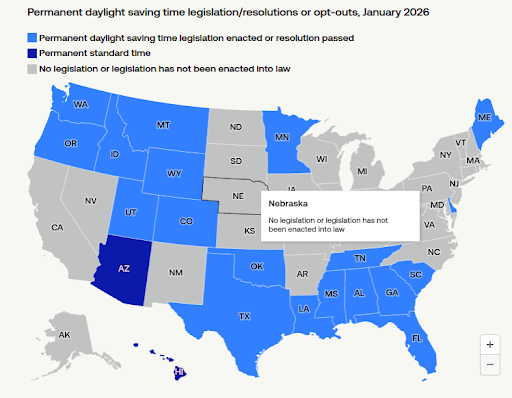
On Sunday, Nov. 1, the clock moved from 2 am back to 1 am. The majority of the United States wonders why we continue to set our clocks differently twice a year. People find daylight savings annoying when they lose an hour of sleep, but enjoy the extra sunlight we get in the spring, just not the darkness in fall.
Daylight savings started during World War I, the purpose of moving an hour forward was to save coal and fuel for the war. By having an extra hour of sunlight, people could also keep their lights off in the house and use the natural light. With the use of daylight, lots of energy was saved because electricity wasn’t being used.
In the fall, the hour of sunlight is moved back to the morning, rather than night. When turning the clock backwards, students on their way to school or adults going to work don’t navigate through dark streets. The sunlight is not needed this early in the morning during the summer, because most kids aren’t up due to not having school.
The downside to having an extra hour of sunlight in the morning is that the sunset feels incredibly early, making people feel more sluggish in the winter. Once people get home from school or work, then have dinner, usually the sun has already set and there’s no light outside.
During the spring, our clocks move an hour forward to give us an extra hour of sunlight at night. Having an extra hour of daylight is great at night because during the summertime everyone wants to be outside. If the sun was set earlier, there’s too much darkness to go outside.
Businesses also love the extra sunlight at night, since many families stay inside after dark leaving their businesses quiet after the sun sets. Daylight savings tends to give businesses better profit in the spring through summer. With the extra light, families are more likely to go out to eat, go shopping, or go outdoors.
The U.S. will continue to fall backward and forward each March and November until federal law is changed. Even though daylight savings isn’t as beneficial as it used to be, it continues to be a tradition.

Leave a Reply