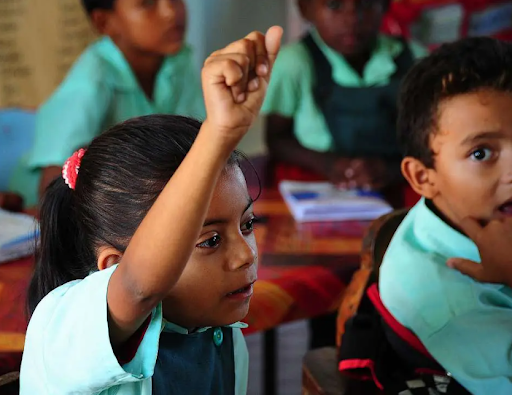
In the book How to Hold a Cockroach by Matthew Maxwell, a boy raises his hand to answer a question in class only to get it wrong. The other kids in the room laugh at him because they believed he was too “stupid” to answer the question. The boy’s embarrassment leads him to believe that he can only raise his hand in class when he absolutely knows the answer.
Like the boy, many students feel like they can only raise their hands when they are confident that they have the answer.
So why do students feel scared to answer questions in class?
When the Brain Faces Uncertainty
When faced with a question, a student’s brain starts predicting the outcome of an action. For example, a teacher asks a multiple-choice question to their students. A student’s brain may predict that the answer to the question is B, but they may hesitate to raise their hand because they are unsure if their answer is correct. If the student chooses to answer the question, and the teacher states the correct answer is actually C, the student’s brain detects that it made an error, producing a signal called error-related negativity (otherwise known as ERN).
However, the way a student responds to uncertainty (and possible failure) can make all the difference – especially in students who may have anxiety or high stress. Those factors can influence a stronger ERN, which research shows may not be a good thing. According to an article from Frontiers for Young Minds, having a high ERN may actually be the brain overreacting and becoming more upset by a mistake than necessary.
While the brain interprets mistakes as information, the limbic system – the part of the brain that regulates emotions – plays a big part in reacting to the possibility of getting an answer wrong. The emotional response to that possibility may shift some students’ comfort in participating during classroom discussions.
The Fear of Being Wrong
In general, people have a desire to be correct. When faced with opposition, most people interpret that as being a threat to their intelligence or understanding of a subject. That feeling can especially be prevalent when a student needs to answer a question publicly to their class.
For some students like Alice Sun, sophomore, the fear of being wrong is tied to academic pressure. Sun said, “Doing well in class is really important, and when you’re wrong, it feels like you’re not getting it or you’re behind other students.” For students who have a similar feeling as Sun, messing up can feel like falling behind compared with their classmates who may understand the subject better.
The Fear of Peer Judgment
Students may fear that participating in class could cause their peers to judge them, or maybe that’s all in their heads. Students who fear their classmates’ judgment may avoid speaking up in class to eliminate the possibility of being judged.
David Adams, junior, recalled a time when he was afraid to speak up in class. “It was a poem we were doing for English class, and my teacher wanted me to read it to the whole class, but I was too scared to do it,” Adams said. In a situation such as Adams, the student’s hesitation comes from the social pressure of speaking in front of others. That fear may restrict those students from participating in class discussions.
The Pressure of Academic Performance
School is a place where students learn. However, the way students are evaluated at school comes down to whether they have the correct answer or not. Anne-Laure Le Cunff, an author for Ness Labs, wrote in an article, “Our education system is established on the paradigm of right and wrong. Answers deemed to be correct are rewarded; wrong answers result in lower grades.” Education systems that use this particular grading system create a fear in some students that being wrong can result in a lower academic performance.
The pressure to perform well can influence how much some students want to participate during class. When asked if getting grades attached to work matters, Laxmi Tannan, freshman, said, “Yes, I want to get all A’s all the time.” That pressure, wherever it comes from, may take away some students’ will to speak up in class.
While for some students the pressure to perform takes away from participation, it may actually encourage some students to participate in class. Tannan added, “The more that I get answers wrong, the more that I understand ‘well, now I’m gonna remember this time’, so I’ll get it right next time.” Sometimes, that academic pressure can actually be a good thing instead of something that could drag a student’s understanding down.
Why Do Students Feel Scared to Answer Questions in Class?
Students can feel scared to answer questions in class for a variety of reasons. The reasons a student may hesitate are not limited to only the ones in this article.
While sometimes being wrong is scary, the truth of the matter is that being wrong can teach students instead of hurting them. Being wrong is a natural part of learning, and learning is what students are supposed to do in school. Sometimes it is scary and may hurt feelings, but it teaches a student how to fix their mistakes.
Students may feel like answering a question is risky, especially if they don’t know the answer or aren’t confident in their own answer, but different kinds of pressure can make that risk feel bigger.

Leave a Reply