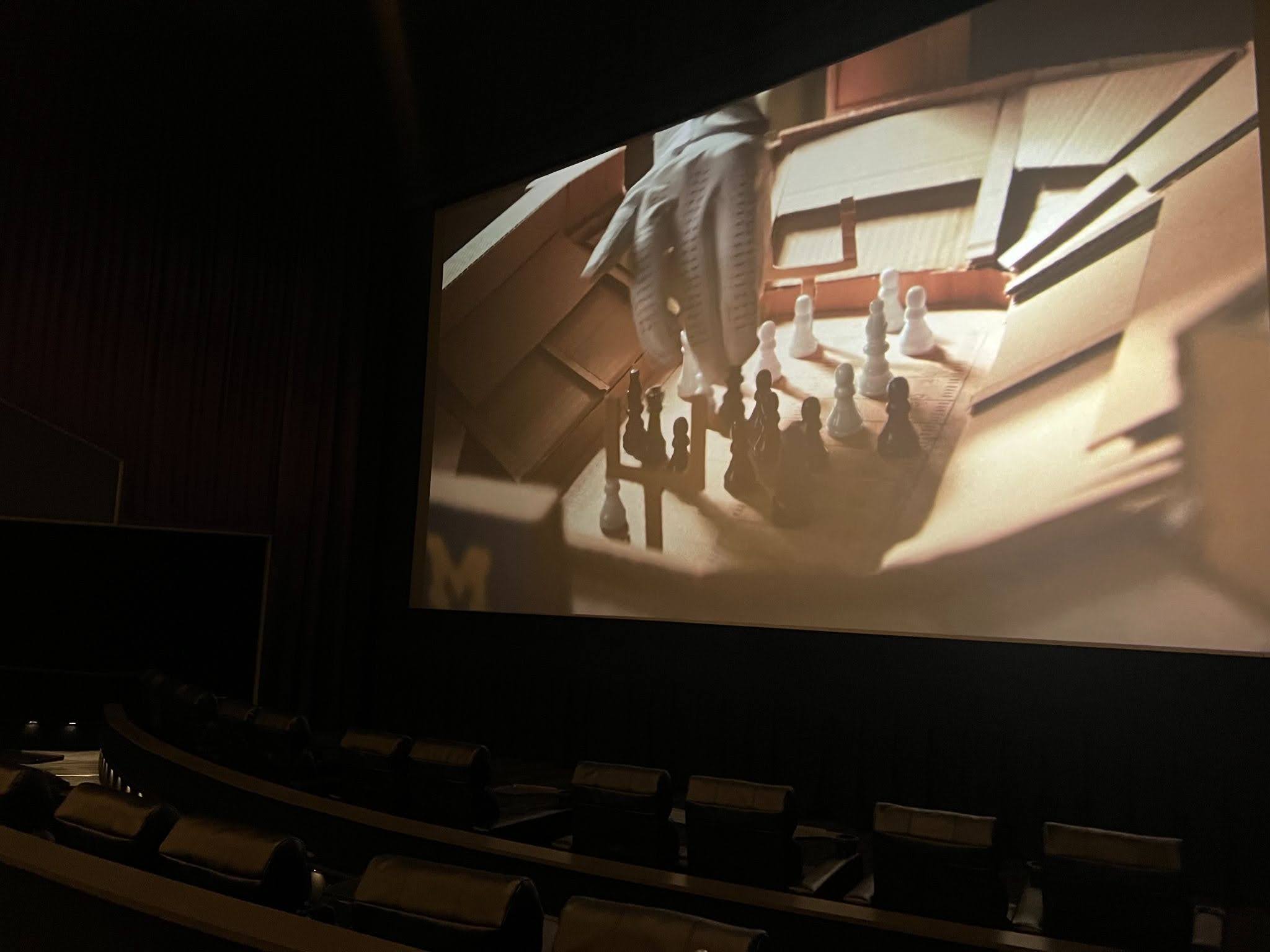
The classic theater experience — from the aroma of freshly popped popcorn to the collective excitement of an audience — is losing its pull as consumers’ watching habits shift. While traditional venues once relied on the unique allure of the big screen, changing entertainment preferences and competing digital options continue to erode the steady box office traffic.
I understand that the overall experience is exciting. But, you can get all of that at home with streaming services.
Your friends? Invite them over to watch with you. A good movie to watch? There are plenty of them on streaming services that you don’t even have access to at movie theaters after popularity drops, or if the publicity was never there. And food — Uber eats, fast food restaurants, and your pantry are the solution.
The reality is that movie theaters are standing on their last two legs. Decades ago, the theater was a place of culture and technology. It was the only place you could access visual excitement that surpassed the tiny, boxed television sitting in your living room.
Talia Brunengraber, sophomore, said, “It [the movie theater] feels more real and like you’re more in the moment, bigger screens.”
But, modern home entertainment offers spatial audio, 4K resolution (the quality of the image produced), and screen sizes that easily transform a living space into what feels like a home movie theater.
To watch a movie on the big screen, you are forced to pay ridiculous ticket prices just to sit in semi-comfortable seats, surrounded by strangers who refuse to stop talking or put their phones down. Before the film even begins, you are put through thirty minutes of commercials and trailers.
The financial burden alone makes the traditional cinema experience impractical for the average person. Between ticket fees and marked-up concession prices, a single night out at the movies can easily top 30 dollars per person.
Furthermore, the exclusive window that once protected movie theaters — the period between a film’s cinematic release and its availability for home viewing — has collapsed.
What used to be a six-month delay has shrunk to a few weeks, or in many cases, day-and-date streaming releases. Audiences have realized that patience is rewarded with maximum convenience. Why battle traffic and ticket lines when the same title will land on Netflix or Disney+ in less than a month?
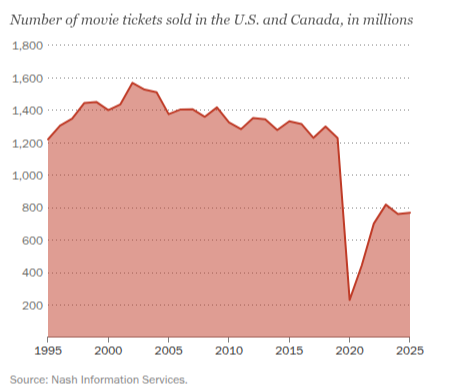
One study by AP Norc from 2025, found that 75% of people have streamed a recently released movie in the past year. Some popular movies from 2025 were Inside Out 2, Deadpool & Wolverine, Wicked Pt. 2, and Sinners.
This study reveals a huge shift in how people watch movies. The chart makes this drop in attendance clearer.
Ever since ticket sales peaked in the 2000s, the total number of tickets sold has steadily dropped, and sales still haven’t come close to recovering to pre-pandemic levels.
Higher ticket prices might help theaters recover some of the lost revenue, but the actual number of people sitting in a theater keeps shrinking every year.
On top of all of this, the way people socialize and unwind on weekends has completely changed. Meeting up at the local movie theater used to be the default outing, but digital connectivity and modern home set ups have caused the physical venue to become outdated.
Today, connecting with friends happens outside of the theater, maybe at home watching movies via streaming services or just hanging out over call.
When Jacob Edwards, senior, was asked whether he would want to go to the movies or somewhere else with his friends, he said, “Other things [besides the movies] feel more productive.”
However, Jade Marquez, senior, said, “When I usually go with my friends, we do watch movies and have a fun time.”
To be fair, there is still a unique magic to the cinema experience that home setups cannot fully match.
Sitting in a pitch black auditorium with a massive screen, booming surround sound, and a room full of people reacting to the same shocking plot twist creates an undeniable sense of shared excitement.
When I asked Hugh Vaughan, freshman, what his favorite part of going to the movie theaters was, he said, “I like hanging out with my friend and just the whole vibe of the movie theaters.”
There is something special about locking your phone away for two hours and completely immersing yourself in a film without home distractions. But, as great as those perks are, they have become a rare luxury rather than a weekly habit.
Streaming platforms have redefined how viewers consume media by offering extensive libraries that cater to every niche interest imaginable. Platforms like Netflix, Hulu, Prime Video, and Disney+ provide instant access to thousands of titles at the click of a button.
Viewers no longer need to worry about sold-out screenings, inconvenient seats, or travel logistics just to watch a film.
Instead, streaming services allow users to pause, rewind, or split a movie across days. Giving consumers complete control over their environment.
Beyond convenience, the sheer volume of content available creates value that physical theaters cannot meet.
While theaters are limited by screen availability and usually prioritize massive blockbusters, streaming services are heavily invested in independent films, foreign cinema, original series, and niche genres that would rarely secure a wide theatrical release.
Streaming services are offering a far more convenient and affordable way to watch media, making them the superior choice for a short time, traditional theaters cannot compete with the endless access and ease that home platforms provide forever.
Movie theaters may never disappear, but they are no longer the king of entertainment. Unless theaters find a way to offer something streaming services can’t match, the big screen will keep fading into the background.

Leave a Reply