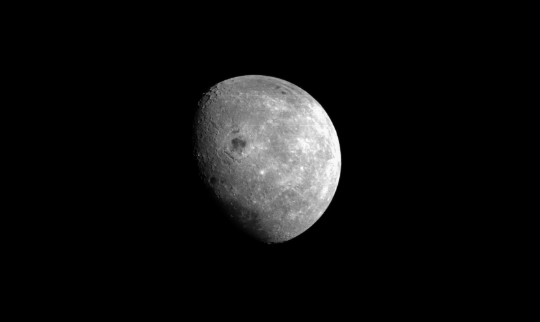
For the first time in over 50 years, man is heading back to the Moon.
Back in April, Artemis 2 was launched, sending four astronauts around the Moon and out of low Earth orbit for the first time since the Apollo missions back in the 1970’s.
The mission took place over 10 days, launching from Cape Canaveral on NASA’s SLS rocket system before travelling along a 685,000-mile “figure-eight” around the far side of the Moon.
According to the National Aeronautics and Space Administration (NASA), the mission is a part of a massive plan to send Americans back to the Moon under the “Artemis” program. Future journeys even outline establishing a permanent presence on the moon.
In the past few years, NASA has continued to push the limits of human exploration and capability, going beyond the moon. Missions such as the Europa Clipper, launched in 2024 to search for life on one of Jupiter’s icy moons, are some of the most technologically advanced and groundbreaking missions humanity has ever undertaken.
NASA hasn’t been doing this all alone, however. Elon Musk’s SpaceX has won the contract to develop and produce the lunar landing module for future Artemis missions to the moon, enabling the return of humans to the moon’s surface.
SpaceX has also played a major role in space exploration over the past few years, with plans to send humans to Mars in the 2030s by using their “Starship,” a revolutionary high-capacity interplanetary vessel.
The first test of the finalized version of Starship took place this past Friday, May 26th, and served as a stepping stone towards manned operations.
Yet the real question is this, why should space exploration matter to us?
Our understanding of space goes far beyond curiosity. Technological advancements from space exploration often find their way into our everyday lives.
Research from microgravity has led to advancements in healthcare, such as improvements in medical imaging, remote medical assistance, and cardiovascular technology, according to the CSA.
Having a presence in Earth’s orbit also helps us understand how our planet responds to environmental changes. The use of satellites go far beyond providing us with GPS — they are able to monitor and measure signs of climate change, an extreme threat which looms over all of our heads.
Humanity’s plan for deeper space exploration, such as having a permanent presence on the moon, virtually promises unprecedented scientific discoveries and technological advancements.
The extreme challenges of sustaining a lunar habitat, or exploring beyond Earth’s orbit, force scientists to invent solutions and new technologies that will change our lives back home.
Excitement regarding humanity’s expansion into the stars serves for much more than publicity stunts and financial gain; it promises change and advancement for all.
NASA plans to launch Artemis 4 sometime during 2028. The mission will touch down on the lunar surface, serving as a stepping stone for all future missions into deep space.

It makes my day better when I eat good food.
Leave a Reply