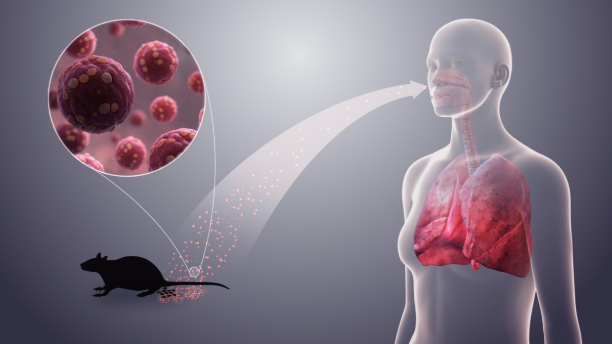
Two weeks off from school felt like a dream, but it was truly the start of a global health emergency. No one needs to be reminded of the 2020 COVID-19 shutdown, but the class of 2027 is increasingly worried about a new virus: the hantavirus.
According to the Centers for Disease Control and Prevention (CDC), the hantavirus is a “family of viruses which can cause serious illnesses and death.”
This virus originated from rodents and only one strand, the Andes virus, is known to spread from person to person.
According to CNN, this virus isn’t new. In 2018, 11 people died in southern Argentina because of the Andes virus. Most recently, it is found to have killed three people on a Hondius cruise ship.
The World Health Organization (WHO) confirmed that passengers on a Dutch cruise contracted the disease. This cruise departed from Argentina on April 1, 2026 and has already stopped in multiple remote and ecologically diverse regions including Antarctica, South Georgia, Nightingale Island, Tristan da Cunha, Saint Helena, and Ascension Island. 88 passengers and 59 crew members are on board to make a total of 147 individuals at risk.
The symptoms may not appear until up to eight weeks after contact with an infected individual.
Symptoms may include:
- fatigue
- fever
- muscle aches in large muscle groups (thighs, hips, back, shoulders)
- headaches
- dizziness
- chills
- abdominal problems (nausea, vomiting, diarrhea, and pain)
As of now, there is no specific treatment for this disease. Patients will receive supportive care, rest and hydration, as well treatment for specific symptoms.
The hantavirus infection has widely not been considered a risk to the public because of how rarely the virus spreads from person to person. Yet, with new developments, the possibility of the Andes virus strain, and PTSD from COVID-19, the class of 2027 is buckling down for another shutdown.
Realistically, the CDC does not predict that the hantavirus will become a worldwide pandemic; yet, 16 US states are monitoring residents that have potentially been exposed, North Carolina included.
Call it inflated or dramatic, but social media has taken the early signs of this virus to the extremities of COVID-19.
Mary Bradley Dalton, junior, said, “I saw [the hantavirus] on TikTok. I keep seeing people being like “from a class of 2020 graduate to a 2027 graduate, good luck. I don’t want my senior year to get ruined.”
The hantavirus poses a threat to the class of 2027 as its potential darkness looms. Senior year is built up to be the “easiest” year of high school, filled with fun, senioritis, and letting loose after a gruesome four years. The threat of hantavirus comes at the cost of 2027’s prom, graduation, and a normal end to a hard life era.
The class of 2027 has previously sacrificed an iconic 5th grade class trip to DC and participated in a drive-thru promotion.
Caroline Murray, junior, said, “I can’t do another pandemic because it’s all fun and games when 5th grade gets canceled, but it’s not fun and games when senior year gets canceled. I have worked too hard to have an online graduation.”
Unlike 2020, schools would have a timely response plan to another pandemic. Similarly to snow days, schools and teachers would be able to collaborate to quickly post assignments online, set up virtual meetings, and continue curriculum without missing a beat, unless your dog ate your wifi router.
Kieran Groves, junior, said, “If the hantavirus became a pandemic, I would miss all the sports and my friends and the senior activities. School wise, it would be a lot smoother than last time [Covid] because we are more prepared for it.”
Even in the first few weeks of hantavirus becoming a headline, this fear of missing out on senior year continues to grow.

It makes my day better when people bring me Chipotle.
Leave a Reply