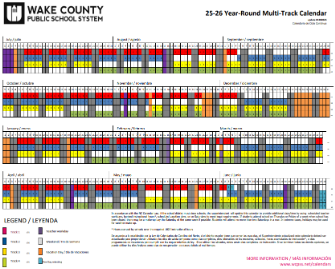
In North Carolina, one of the few states where both traditional and year-round calendars are widely used, students and families often find themselves choosing between two very different approaches to the school year.
Traditional schools follow a long summer break, running from late August to early June and then pausing for about two to three months. In contrast, year-round schools spread the same number of school days more evenly throughout the year, using shorter breaks instead of one long summer vacation. While both options cover about 180 instructional days, the calendar structure looks very different for students and families.
The differences between traditional and year-round schools go beyond the schedule itself. Traditional calendars are familiar and often align with summer camps, family vacations, and teen jobs. Year-round calendars break the year into instructional blocks, usually lasting nine weeks, followed by two to three-week breaks.
Supporters argue that this setup reduces “summer learning loss,” when students forget material during extended time away from school. These breaks can also be used for tutoring, enrichment programs, or additional support.
“Traditional is better because of summer. When I come back from break, it feels like a fresh start,” said Breon McRae, senior.
Some students also mention how the longer summer provides more structure and consistency.
“I grew up going to traditional school, and I feel like it has more structure throughout the school year than year-round. We know when our breaks will be every year, and I can plan trips around that and enjoy summer more,” said Bryanna Guilliams, senior.
The adjustment between the two calendars can be challenging for students who have experienced both systems. Moving from shorter, more frequent breaks to one long summer and limited extended holidays often requires a shift in routine and expectations.
“Transitioning from year-round to traditional was tough because we had breaks in between every quarter, so it was hard to adjust to having only spring break and Christmas break. Also, having a longer summer rather than a couple of weeks is a lot better,” said Nate Gibbons, sophomore.
On the other hand, some students say they actually prefer the year-round schedule because of the consistent breaks throughout the year. Instead of waiting months for summer vacation, students appreciate having time off every few weeks to rest and recharge.
While both traditional and year-round schools aim to support student learning, many students say they prefer the structure and long summer break that traditional schedules offer. For them, the extended time away from school provides opportunities to grow outside the classroom and return feeling refreshed for a new academic year.

Leave a Reply