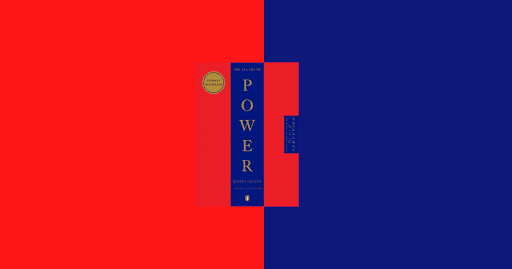
The question of whether The 48 Laws of Power should be banned at Leesville is worth exploring, especially as we consider the implications of banning any book.
While Robert Greene’s work delves into manipulation and power dynamics, it also equips readers with the tools to recognize when others are manipulating them.
This raises the question: should we allow students access to such knowledge, even if it raises ethical concerns?
The 48 Laws of Power, written by Robert Greene, is both an educational and controversial piece. It teaches one how to manipulate others to their advantage, yet it also helps them to recognize better when others are manipulating them.
The book essentially teaches you how to gain power in society and provides historical examples of each law in practice, as well as examples of going against these laws.
One might compare the book to a modern version of Machiavelli’s The Prince, which outlines how a ruler can acquire and maintain political power, often by pragmatic and amoral means.
If you want to learn about all the laws in this book, feel free to read it yourself, but today I’ll focus on the most crucial chapters for time’s sake.
Law 2 suggests that friends are not to be trusted and that if given the chance, they will betray you. We would all love to believe this fact isn’t actual; however, when it comes down to it, we are human and inherently selfish.
The law also goes on to explain that friends will often lie to your face to avoid conflict, whereas your enemy will always be honest with you, for they have nothing to lose.
Now, the chapter is not simply saying not to have friends; it says that friends should be reserved for friendship alone, and that when it comes to business, enemies will be more loyal because they have more to prove.
Law 7 uses a powerful example about a boy named Nikola Tesla who worked for Thomas Edison in 1883. Edison hired him with the promise of $50,000 if he could complete an impossible task that no other inventor could figure out.
Tesla labored day and night, and when he had finally completed the project, he presented it to Edison and asked for his money. However, Edison responded, “Tesla, you don’t understand our American Humour,” and then gave him a small raise instead.
The system Tesla developed is still used today; however, Tesla never received credit for his work, and people instead perceived Edison as the bright mind behind the invention.
This transgression of the law showcases the importance of taking the credit for yourself. It also teaches the reader to be an Edison and not a Tesla. While taking credit for others’ work may be controversial, it is better to take their work than to have them take yours.
Law 11 teaches people one of the most crucial parts of manipulation: always keeping others codependent on you.
When people think they no longer need you, you are expendable, replaceable, and can be tossed aside with no consequences. “Sooner or later someone comes along who can do the job just as well as [you] can,” said Greene.
He warns readers to learn to possess a talent and creative skill that cannot be replaced — the ability to manipulate others into keeping them.
Law 14 states that one should pretend to be friends with an enemy to discover their weaknesses.
The law emphasizes the importance of paying close attention to your enemies during social gatherings, when their guard is down.
It also suggests giving your enemy a false confession to seem as though you are opening up to them, and they will open up to you.
This is a tactic often used in battle, but is it civil to use in real-life everyday situations?
The last of the laws I am discussing today, Law 25, suggests the importance of changing yourself to fit into society’s mold.
This idea has a severe negative impact on readers, who may feel they are not enough and must change themselves to be better liked.
So, should the book stay banned?
There is no simple answer to this question.
This book, while educational, delves into controversial themes of manipulation and power dynamics. It teaches readers how to navigate the “game of power,” providing historical examples that illustrate each law in practice.
Some may argue that the book promotes unethical behavior, as it encourages the manipulation of friends and foes alike. For instance, laws like “Never put too much trust in friends” and “Pose as a friend, work as a spy” raise ethical concerns about interpersonal relationships.
However, the book also equips readers with the tools to recognize when others are manipulating them, fostering critical thinking and self-awareness.
By engaging with such material, students can better understand the complexities of human interaction and power structures. While some laws may seem morally ambiguous, they offer valuable life lessons that can help students navigate real-world challenges.
Ultimately, rather than banning the book, it could create essential discussions in schools about ethics, power, and personal integrity in today’s society.

My best friends make my day better.
Leave a Reply